We study lipids in the brain- how they are made, moved, and degraded, and what specific classes do
|
|
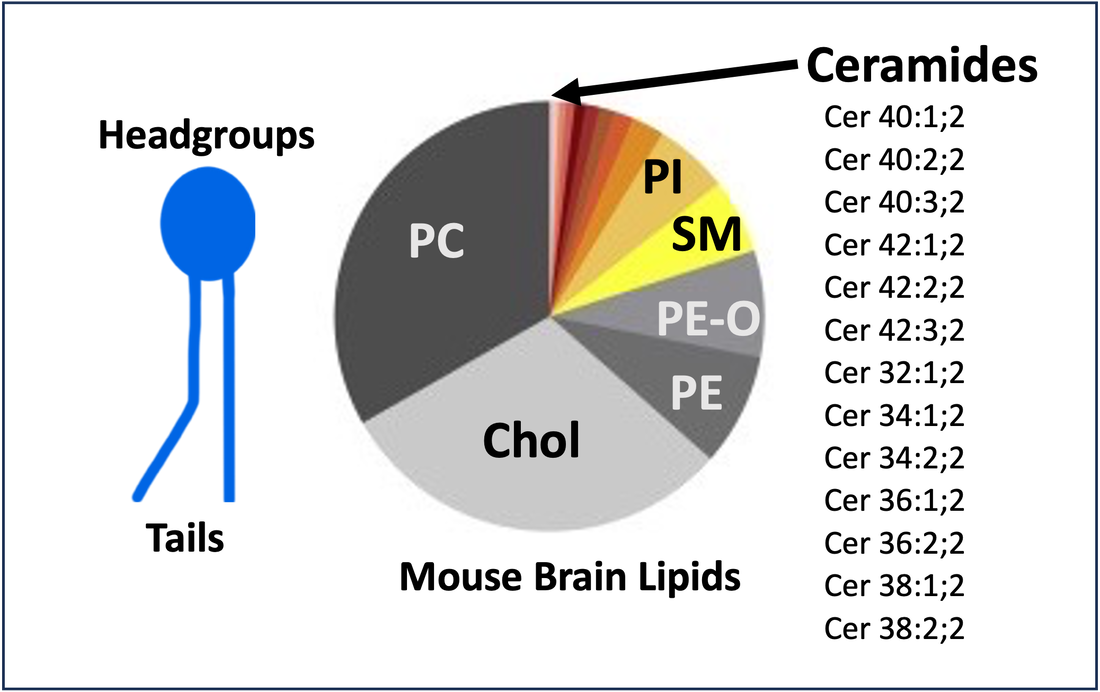 Thousands of lipids constitute our brain's membranes. Hydrophobic chains of diverse length and unsaturation are combinatorially paired with diverse headgroups. A small fraction of Ceramides are shown (Fitzner 2020; 36;2;2 = 36 total carbons, 2 double bonds) Thousands of lipids constitute our brain's membranes. Hydrophobic chains of diverse length and unsaturation are combinatorially paired with diverse headgroups. A small fraction of Ceramides are shown (Fitzner 2020; 36;2;2 = 36 total carbons, 2 double bonds)
|
Vaughen Lab is opening 8/2024 at UCSF Parnassus in the Anatomy Department!

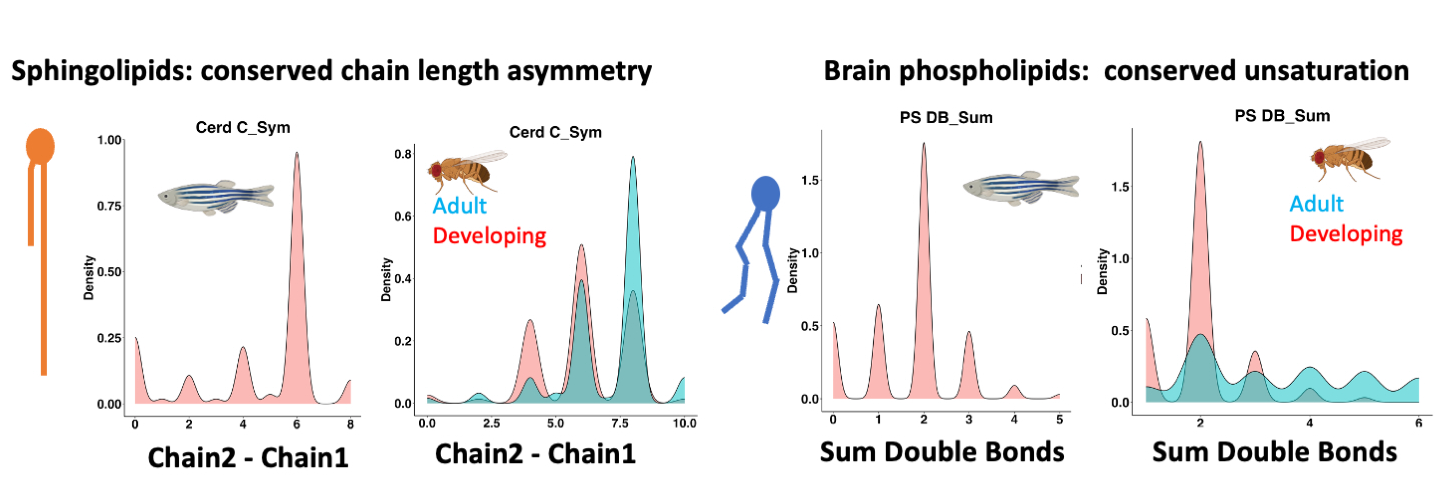
From flies to fish (and humans!), there are shared biochemical signatures in brain tissue across lipid subclasses. Mature brains feature a high degree of unsaturation in phospholipids, and high chain length asymmetry in sphingolipids. What functions do these different lipids play?
We are grateful to our funders!